
Most people think Resume Writing in the U.S is just listing jobs. But this approach does not work now.
introduction:Resume Writing in the U.S
A resume is not a record of everything you have done. It is a document built for one purpose, which is to get you interviews. If your resume is not written in the right way, it will not pass Applicant Tracking Systems and it will not hold a recruiter’s attention. In many cases, your resume is rejected before a human even reads it. This is why qualified candidates often do not hear back.
After working on resumes that lead to interviews, one thing is clear. The difference is not experience. The difference is how that experience is presented.
Why Most Resumes Do Not Work
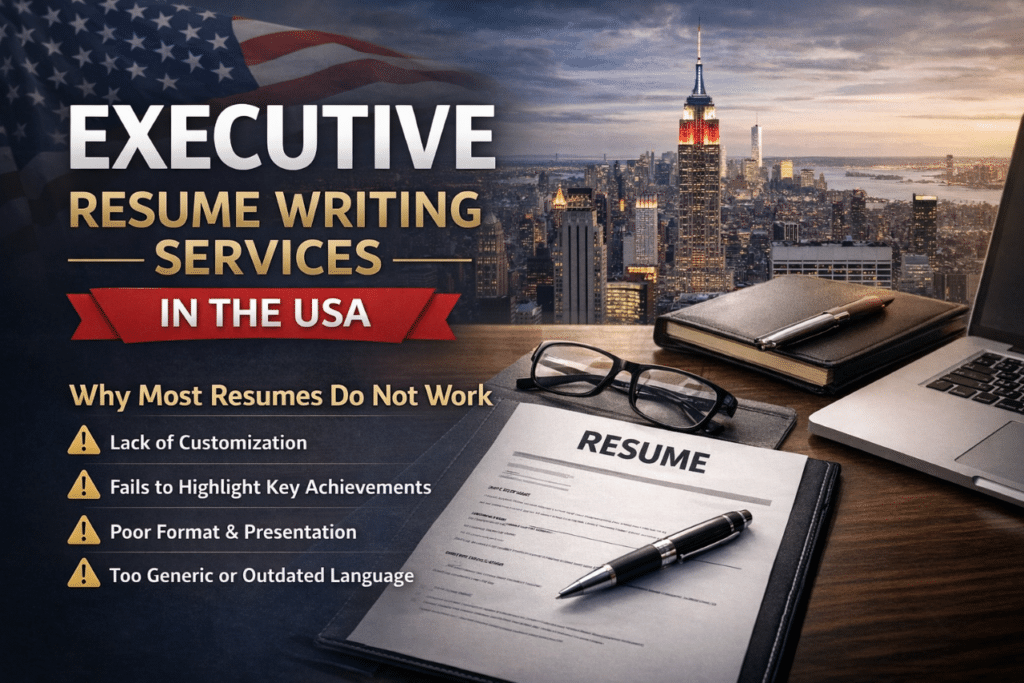
Most resumes do not work because they focus on tasks instead of outcomes.
They describe what someone was responsible for, but they do not explain what was achieved. This makes it hard for a recruiter to understand the candidate’s value.
For example, many resumes include statements like managing a team or handling operations. These statements are common and do not show any clear impact. When multiple candidates use the same type of language, they start to look the same. There is nothing that helps one stand out from another.
Another issue is that many resumes try to include too much information. Candidates often add everything they have done, even if it is not relevant to the role. This creates confusion. The more information you add, the harder it becomes to see what actually matters.
A strong resume does the opposite. It removes what is not important and focuses only on what supports the target role.
Start With Positioning Before Writing
Most people start writing their resume without a clear direction. This leads to a document that feels general and unfocused. Before writing, you need to decide what role you are targeting. This step is important because every role requires a different focus.
You should review job descriptions and pay attention to the skills, tools and responsibilities that appear often. This helps you understand what employers are looking for.
Once you have this clarity, you can decide what parts of your experience to highlight and what to leave out. Without this step, your resume tries to fit too many roles at once. As a result, it does not fully match any of them.
A well-written resume is always built for a specific direction. It is not meant to work for every job.
Focus on Results, Not Responsibilities
A strong resume shows what you achieved, not just what you were assigned to do. Responsibilities are expected but they do not explain how well you performed.
When you only list tasks, the recruiter has to guess your impact. Most will not take the time to do that. Instead, you should explain what changed because of your work. This gives clear evidence of your contribution.
For example, instead of stating that you managed a process, you can explain how you improved it and what the outcome was.
This approach helps the reader understand your value without extra effort. Each point in your experience should answer a simple question. What was the result of your work? When your resume consistently shows results, it becomes easier to trust your ability.
Use Numbers to Add Clarity
Numbers help the reader understand your work more clearly. When you include numbers, you show scale, progress, or improvement. This makes your experience easier to evaluate.
For example, saying that you improved a process is not specific. Saying that you reduced processing time by a certain percentage gives a clear picture.
You can include numbers related to growth, volume, time saved, or revenue. Even simple estimates can help, as long as they are reasonable. The goal is not to make your work sound bigger than it was. The goal is to make it easier to understand. When your resume includes clear data, it becomes more credible and easier to compare with other candidates.
Write for ATS and Recruiters at the Same Time
In many cases, your resume is first reviewed by a system before it reaches a recruiter.
This system looks for keywords and matches your resume with the job description. If the match is low, your resume may not move forward. At the same time, your resume still needs to make sense to a human reader. If it sounds forced or repetitive, it will not perform well.
This is why balance is important.
You should read the job description and identify the key terms that are used more than once. These usually include skills, tools and role-specific language. Then, you include those terms naturally in your resume where they make sense.
You do not need to repeat the same words again and again. You only need to make sure your experience aligns with how the role is described.
A good resume works for both systems without losing clarity.
Structure Makes Your Resume Easier to Read
Even strong content can be ignored if the structure is not clear. Recruiters do not read resumes in detail. They scan them quickly to find key information. If your resume looks crowded or unclear, it becomes difficult to follow. In many cases, the reader will move on.
This is why structure matters.
Each section should have a clear purpose. The top should show your value. The experience section should support that value with proof. Bullet points should be short and direct. Each point should focus on one idea.
Spacing, alignment and consistency also play a role. A clean layout helps the reader stay focused. When your resume is easy to scan, your message becomes easier to understand.
Tailor Your Resume for Each Role
Using the same resume for every job does not work.
Each role has different priorities. Even similar roles can focus on different skills or outcomes. If your resume is too general, it will not feel relevant to the position. Tailoring your resume does not mean changing everything. It means adjusting what you already have. You can change the order of bullet points, highlight different achievements and update keywords based on the job description.
This helps your resume align more closely with what the employer is looking for. When a recruiter sees a clear match, your chances of getting shortlisted increase.
A small adjustment in focus can make a strong difference in results.
Keep Your Writing Clear and Direct
Many people try to make their resume sound impressive by using complex words or long sentences. This often makes the content harder to understand.
A recruiter should not have to read a sentence twice to understand what you mean. Clear writing is more effective than complicated language. Each sentence should communicate one idea. It should be direct and easy to follow. Simple words do not reduce the value of your experience. They make it easier to understand.
When your writing is clear, the reader can quickly see your skills and results.
This helps them decide faster if you are a good fit for the role.
Conclusion:
A resume does not need to be long or complex to be effective. It needs to be clear, focused and aligned with the role you are targeting.
When your resume shows results, uses the right language and is easy to read, it becomes easier for a recruiter to make a decision.
This is what leads to interviews.
If your resume is not working, the issue is usually not your experience. It is how that experience is presented. Once you fix that, you will start to see better responses.